Vienna, 1798. Age 27.
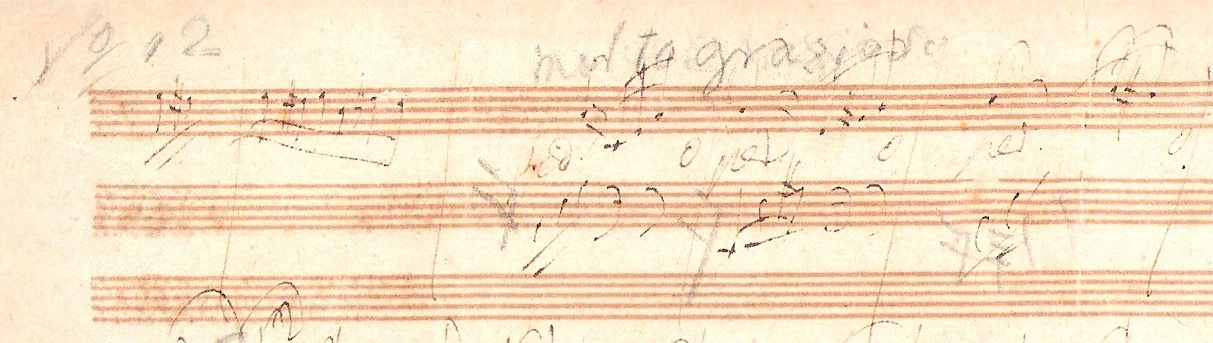
Piano Sonata No. 8 in C minor, op. 13, composed 1798. First movement, Grave — Allegro di molto e con brio.
This browser cannot play the Ogg file. The recording is at Wikimedia Commons.
Vienna, 1798. Age 27.
1801. To Franz Gerhard Wegeler, in Bonn.
… my ears whistle and buzz continually, day and night. I can say I am living a wretched life. For almost two years I have ceased to attend any social functions, just because I find it impossible to say to people: I am deaf. If I had any other profession it would be easier, but in my profession it is a terrible handicap.
… I beg you to keep what I have told you about my hearing a great secret, to be confided to nobody, whoever he may be.
Ludwig van Beethoven to Franz Wegeler, Vienna, 29 June 1801. The letter itself is held by the Beethoven-Haus, Bonn. No freely reproducible photograph of it exists; the words are given here in translation.
Heiligenstadt, 6 October 1802. To his brothers. Found in a drawer after his death, twenty-five years later.
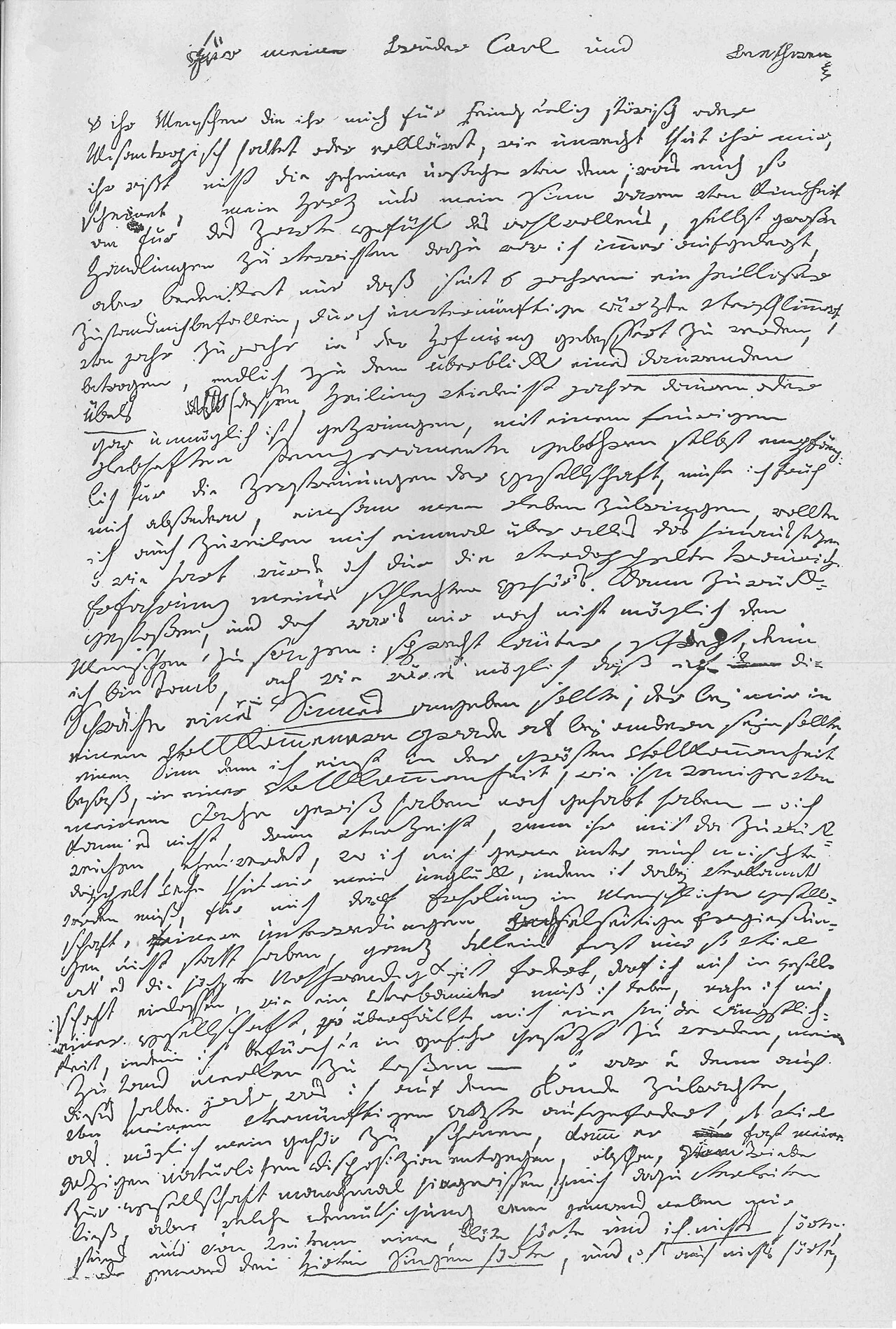
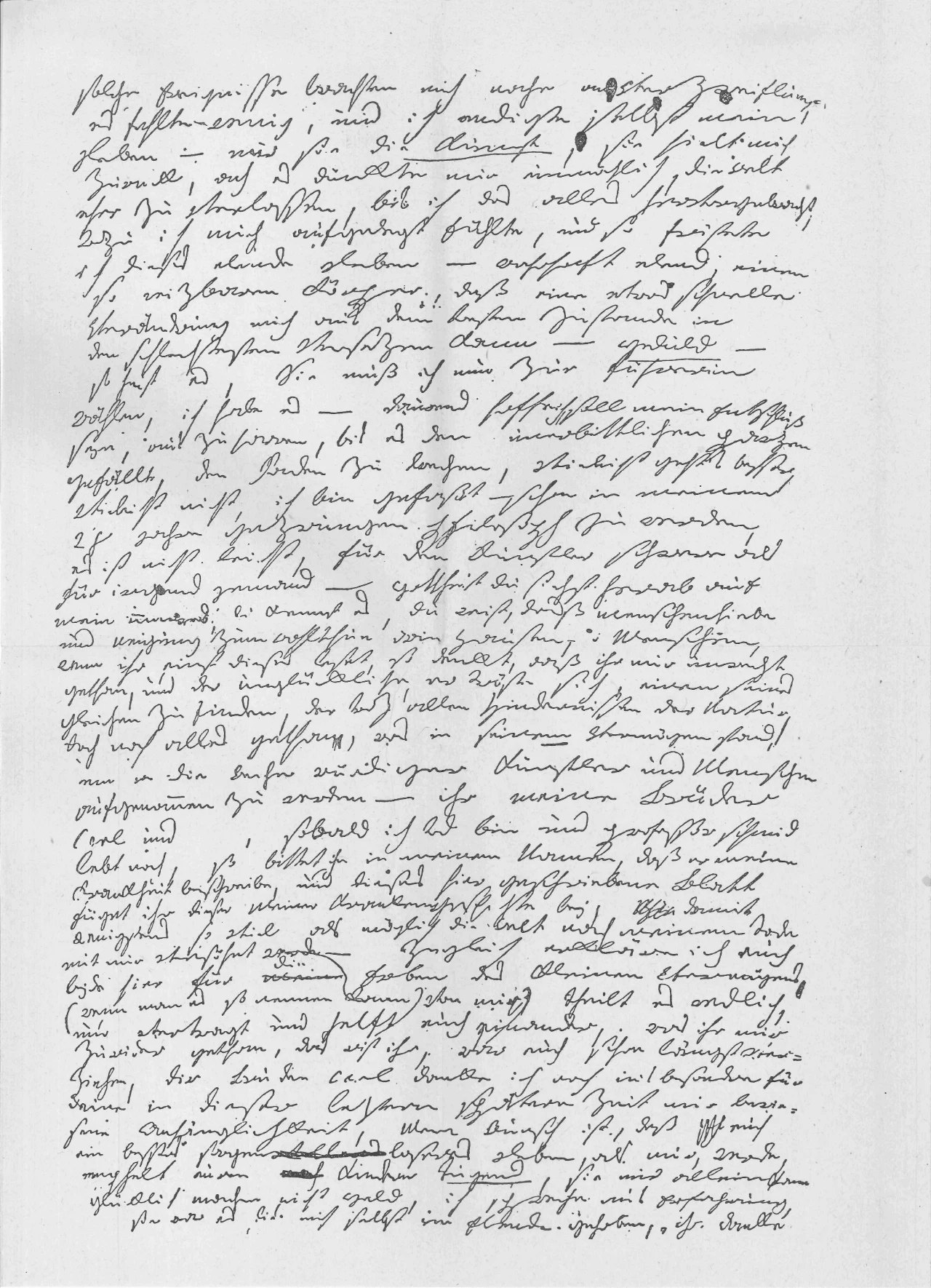
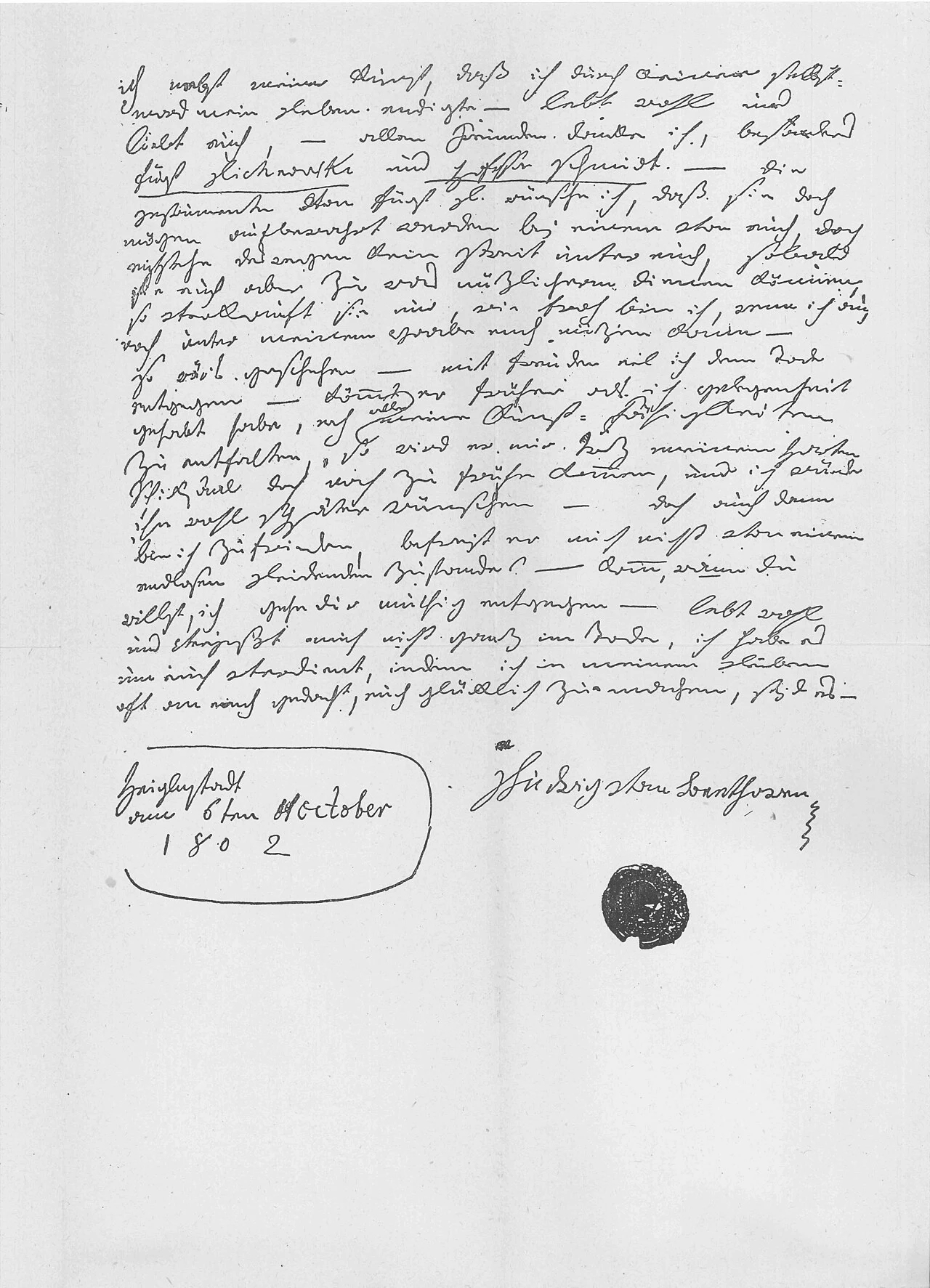
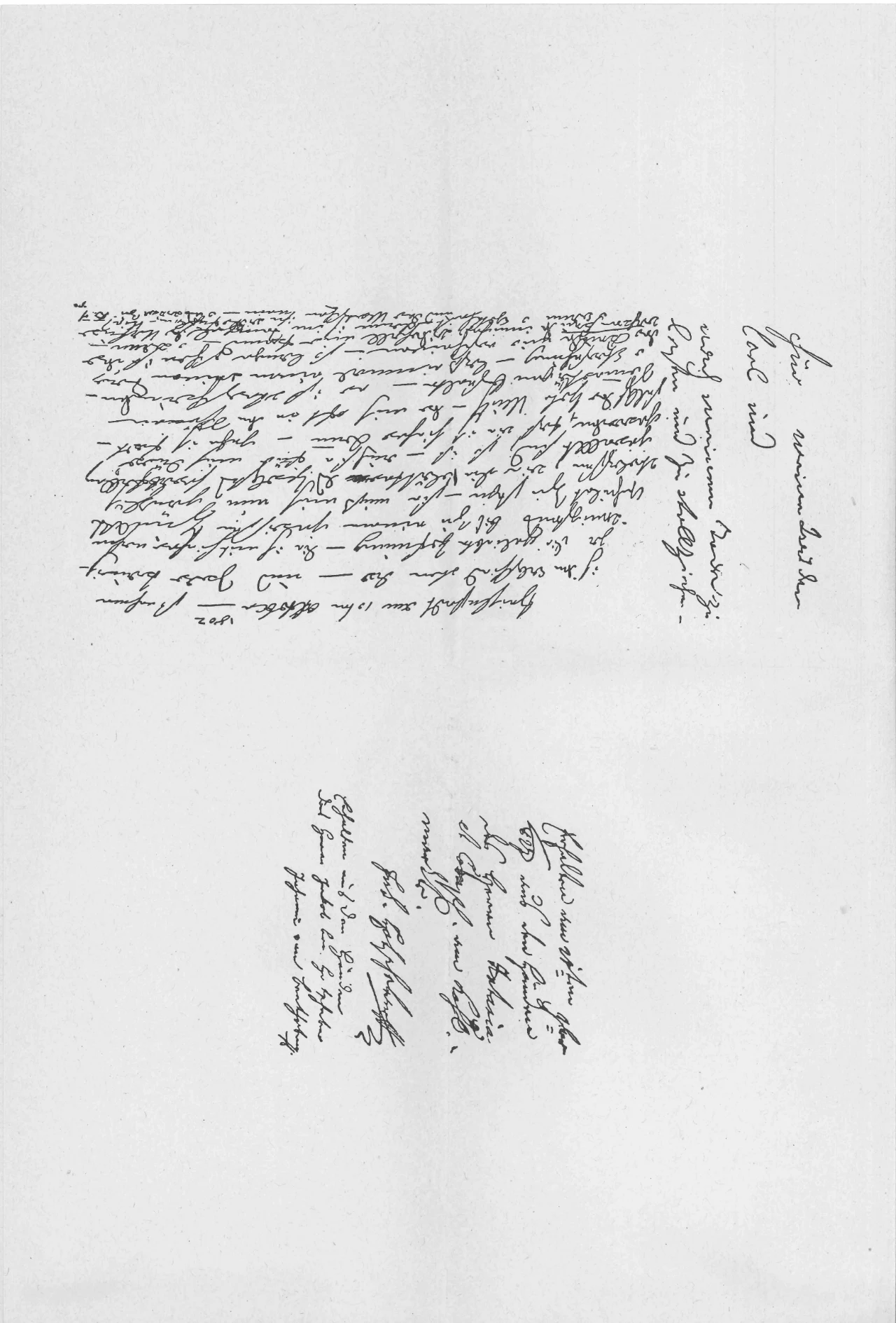
The Heiligenstadt Testament, facsimile of the four leaves. Hamburg State and University Library. Public domain. Almost nobody can read the hand comfortably; the passage most people come for is on the first leaf, and reads:
“… how could I possibly admit an infirmity in the one sense which ought to be more perfect in me than in others, a sense which I once possessed in the highest perfection …”
“… it seemed to me impossible to leave the world until I had brought forth all that I felt was within me.”
From 1818. The conversation books.
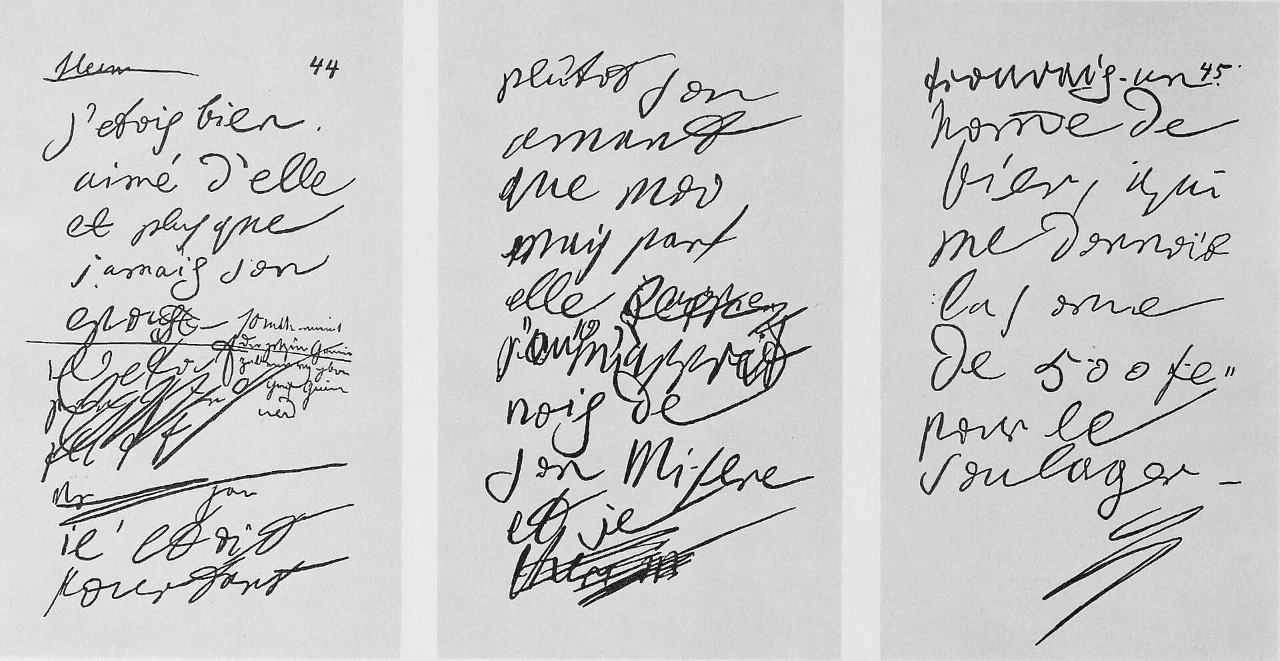
1824.
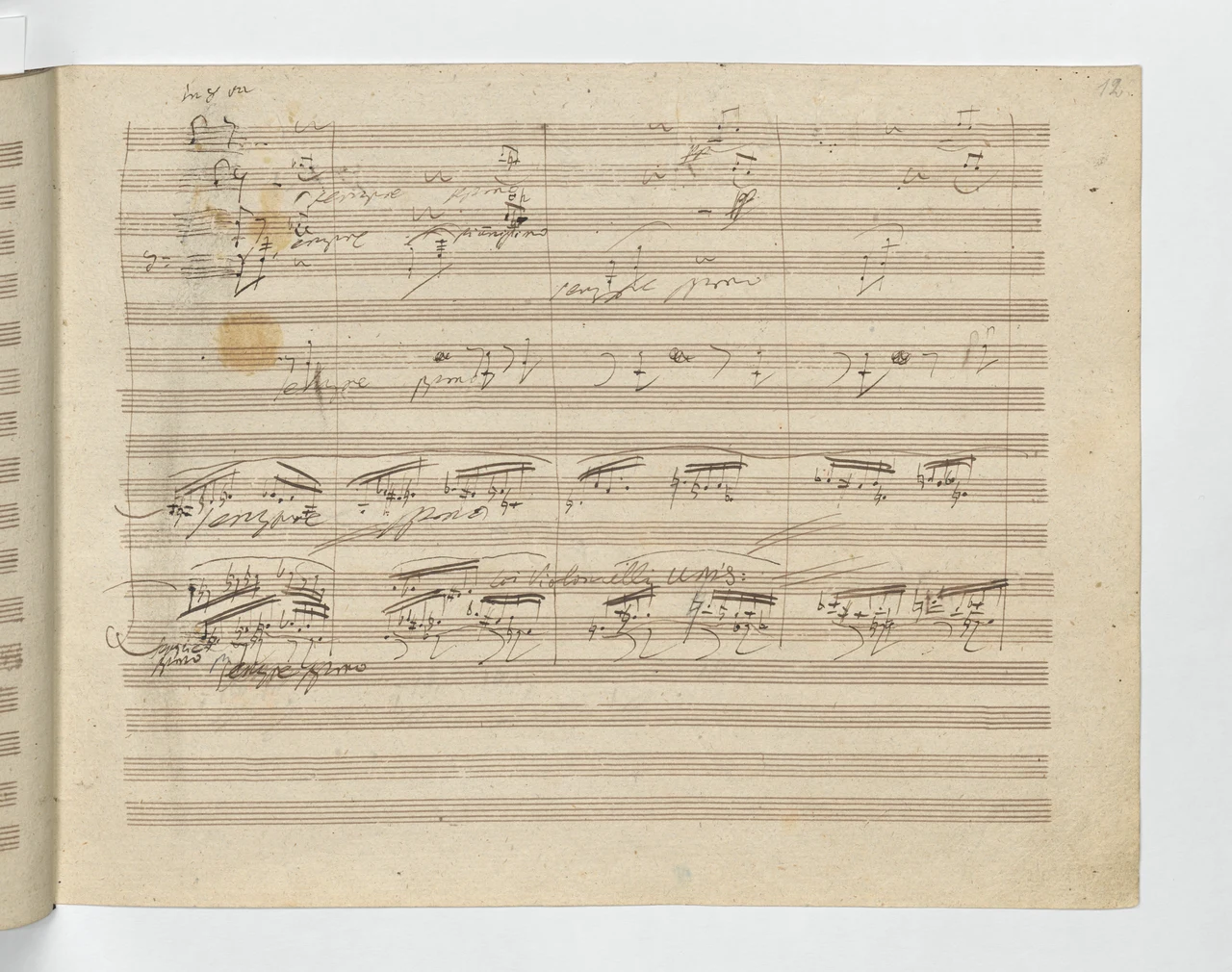
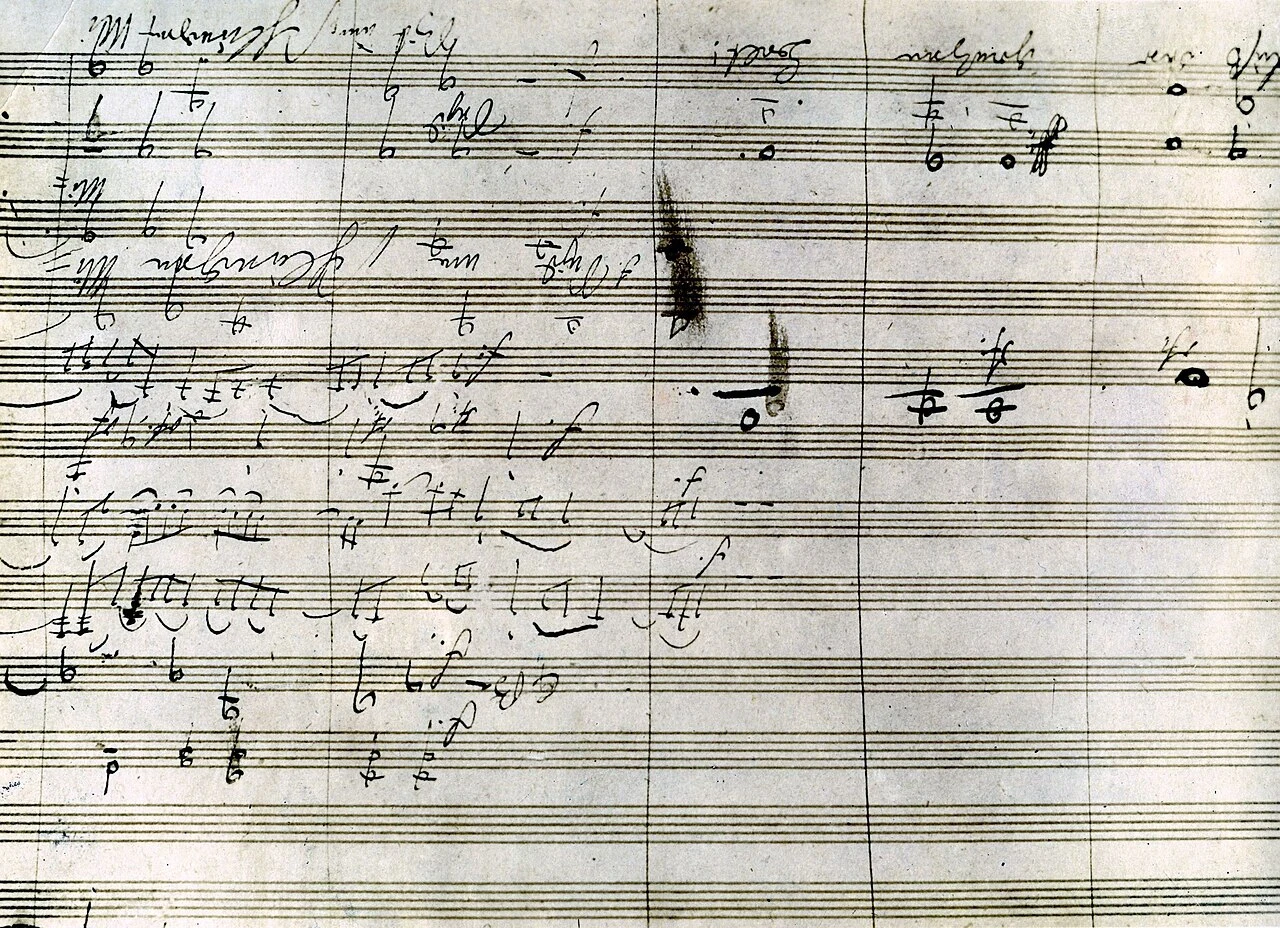
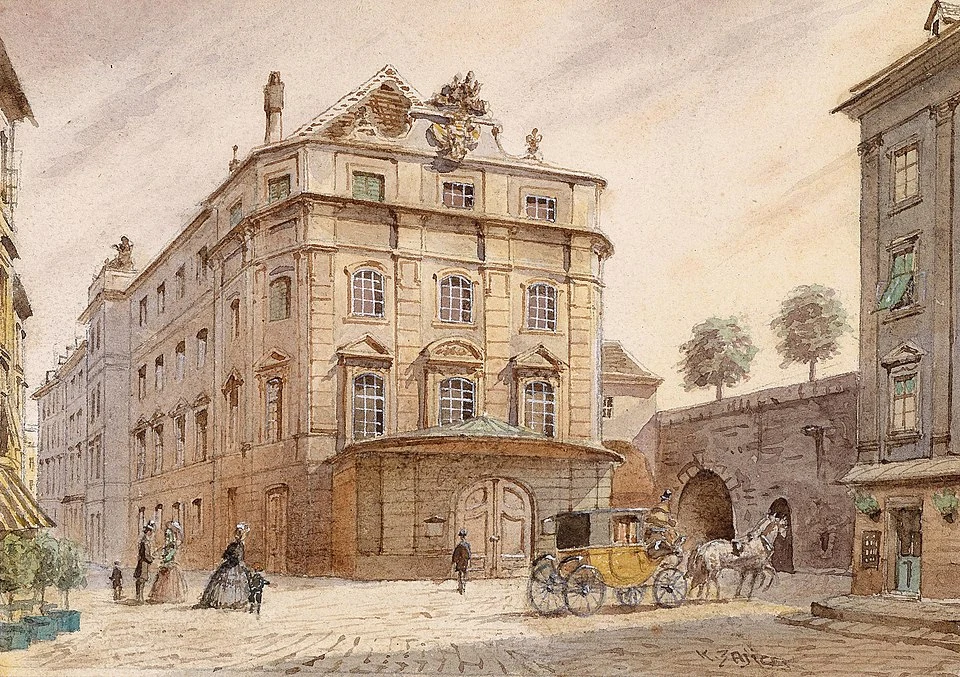
7 May 1824. Theater am Kärntnertor, Vienna. The first performance of the Ninth.
He stood beside the conductor, Michael Umlauf, beating time into music he could not hear; the players had been told to follow Umlauf.the accounts agree on this
When it ended he was still turned toward the orchestra, several bars behind.the accounts agree on this
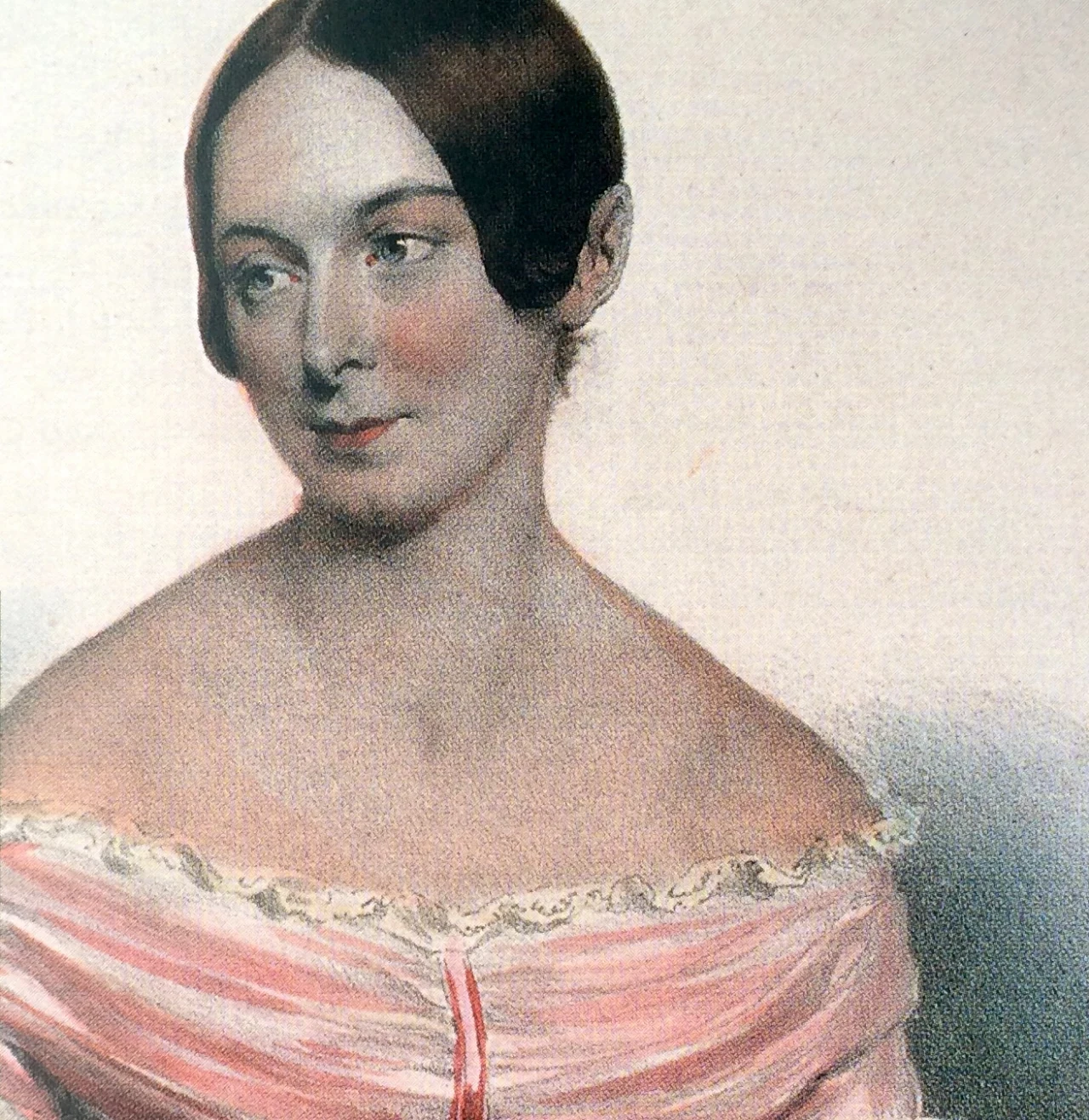
Caroline Unger took his sleeve and turned him around to face the hall.whether after the scherzo or at the end, the accounts differ
Five ovations. Hats and handkerchiefs in the air, so that the applause could be seen.the accounts agree on the handkerchiefs
Ludwig van Beethoven
Symphony No. 9
1824
Sources. The sketch (BH 116) and the conversation book (D. 10) are reproduced from the Beethoven-Haus Bonn and the Berlin State Library respectively, via Wikimedia Commons; the Heiligenstadt Testament from the Hamburg facsimile; the Ninth's autograph from the Berlin State Library and the Nationaal Archief; the theatre from a painting by Karl Wenzel Zajicek; all public domain. The 1801 letter to Wegeler is quoted in translation; it is held in Bonn and no free reproduction exists.
Recordings. Op. 13, first movement: a performance released to the public domain (CC0). Op. 125, fourth movement: Musopen, CC BY-SA 3.0. Both are recordings available to you today. Sound on this page is withdrawn at the point in the record where it stopped being available to him; nothing here attempts to reproduce what he heard, at any stage. We do not know that.
The conversation books are real; 139 survive. His side was often spoken. Accounts of the premiere differ on exactly when Caroline Unger turned him toward the audience.